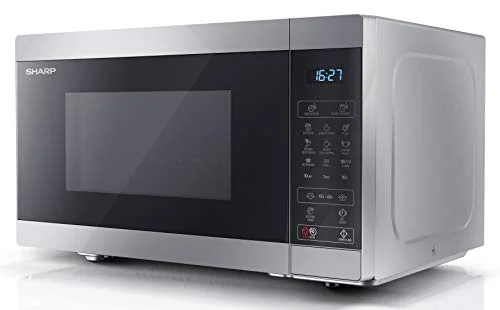
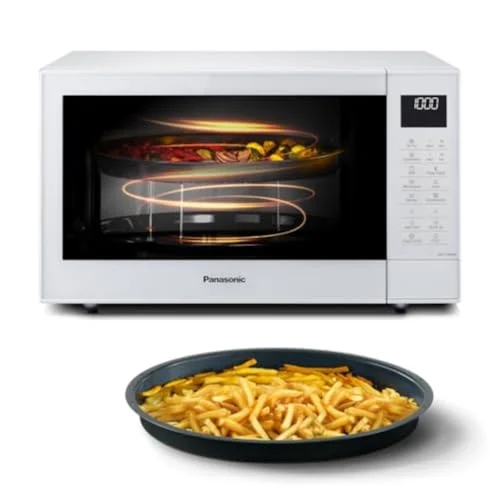
Type: solo, grill or combination
The first and most important choice is the type, because it decides what the microwave can do and how much it costs. A solo microwave reheats, defrosts, melts and steams, and for most people that covers everything they ask of one. A grill microwave adds a heating element that browns and crisps, useful for cheese-topped dishes, gratins and bacon. A combination microwave adds a convection oven on top, so it can bake and roast like a small oven.
The honest advice is to buy the simplest type that does what you need. If you only reheat and defrost, a solo is not a compromise, it is the right tool, and you will spend less and clean less. Choose a grill only if you genuinely want browning, and a combination only if you want a microwave that can also bake. Each step up costs more, takes more space and adds a little cleaning, so do not pay for ability you will not use. Our full breakdown is in the solo versus grill versus combination guide.
Size and capacity: getting the litres right
Capacity is measured in litres, and matching it to your household and your worktop is the second decision that matters. As a rough guide, a 17 to 20 litre cavity suits one or two people and tight spaces; 23 litres is the comfortable everyday size that fits a standard dinner plate with room to spare; and 25 litres and above suits families and large containers. Most people are well served by 20 to 23 litres.
There is one common mistake to avoid. The litre rating describes the cavity, not the external body, and a roomy interior can sit in a surprisingly large case, while a well-designed machine fits a usable cavity into a compact shell. So always check the external dimensions against your worktop depth and the gap under any wall cabinet, and leave clearance around the vents for airflow. If space is tight, our small-kitchen guide covers exactly what to measure.
Wattage and power: how many watts you need
Wattage measures cooking power, and more is not automatically better. 800 watts is the everyday sweet spot: quick enough to reheat and defrost at a sensible pace, and the level most ready-meal instructions assume, so packet timings simply work. A 700 W model is slower and may need extra time, while 900 W and above speeds things up.
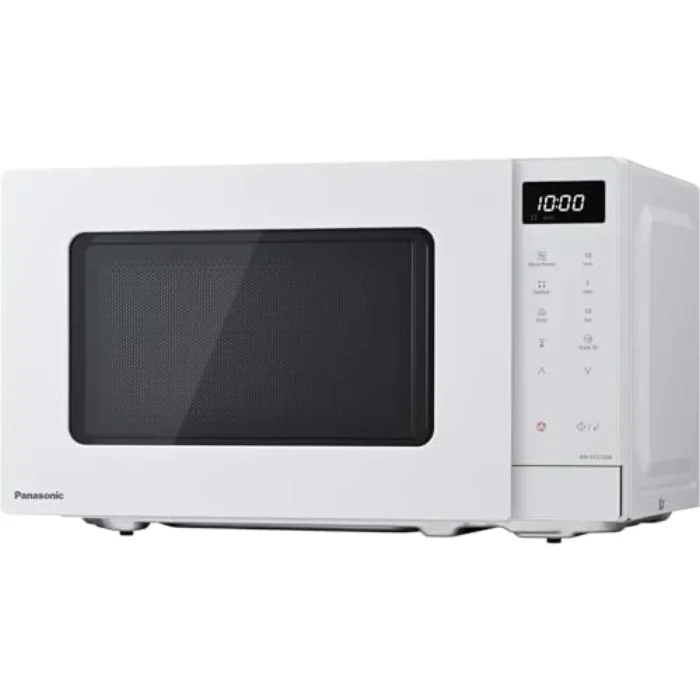
More important than the headline figure is how the power is delivered. A conventional microwave creates a lower setting by pulsing full power on and off, which is why basic models so often leave food hot at the edges and cold in the middle. An inverter, as on the Panasonic NN-DF386, delivers steady lower power instead, so food heats evenly and delicate jobs are gentler. If even reheating matters, the inverter is worth more than extra watts. The full explanation is in our wattage guide.
Features worth paying for, and ones you can skip
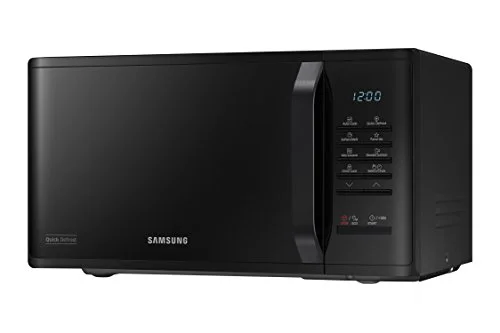
A few features genuinely earn their place. A wipe-clean ceramic enamel interior, as on the Samsung, cleans in seconds and resists the staining and scratching that painted cavities suffer. Auto-cook and defrost programmes set time and power for common foods, which takes the guesswork out. A turntable remains the most reliable way to heat food evenly, and a clear display and a smooth door make a machine pleasant to live with day to day.
Other features are nice-to-have rather than deciding factors. Express-minute buttons and clock displays are convenient but trivial. Smart or app-connected microwaves add cost without solving a real problem, since you stand in front of a microwave anyway. And while brand buys you build quality, support and resale confidence, worth paying for if you value longevity, it is never a substitute for choosing the right type and size first.