How to measure your space first
Before you look at a single model, get a tape measure out, because the most common small-kitchen mistake is buying on the litre rating and discovering the microwave is too deep or too tall for the gap. Measure three things. First, the width of the worktop space, leaving a few centimetres either side for airflow. Second, the depth, remembering the microwave must not overhang the front edge or hit the wall at the back, and that some need rear clearance for the vents. Third, the height, which matters most if the microwave sits under a wall cabinet, where there must also be room for the door to open and steam to escape.
Write those three numbers down and treat them as hard limits. A microwave that is two centimetres too deep is no use however good it is, and returning a heavy appliance is a chore. With your measurements in hand, you can compare against the external dimensions of any model and rule out the ones that will not fit before you fall for them.
Body size versus cavity size: the trap to avoid
This is the single most important thing to understand when buying for a small space. The litre figure describes the cavity, the usable space inside, not the external body. Two microwaves with the same 20-litre cavity can have noticeably different footprints, because some designs are far more efficient with their casing than others. A poorly packaged 20-litre model can take up as much worktop as a well-designed 23-litre one.
So in a small kitchen you are really looking for the best ratio of usable cavity to external size. You want enough room inside to fit a dinner plate, which generally means at least a 17 to 20 litre cavity, in the smallest possible body. Dropping below 17 litres to save space usually backfires, because the cavity becomes too cramped for everyday plates and dishes, leaving you no better off. The sweet spot for most small kitchens is a compact 20-litre solo.
Which compact microwave to buy
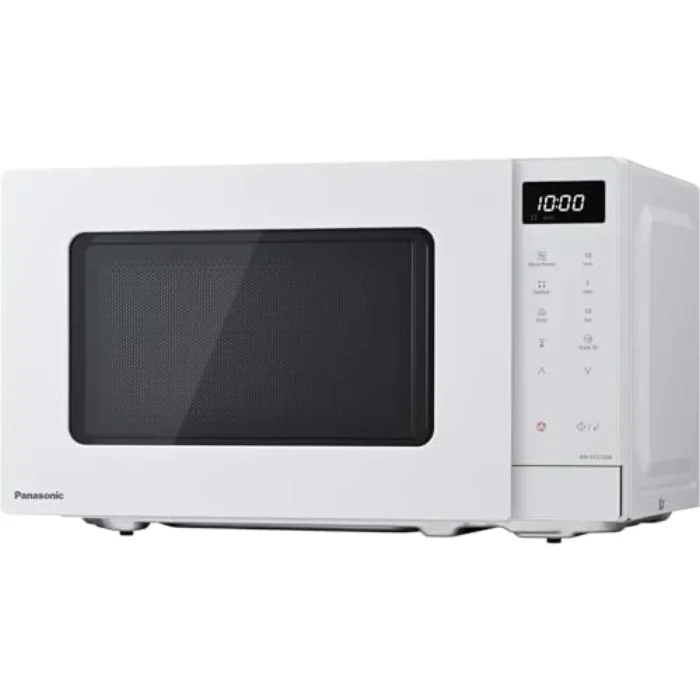
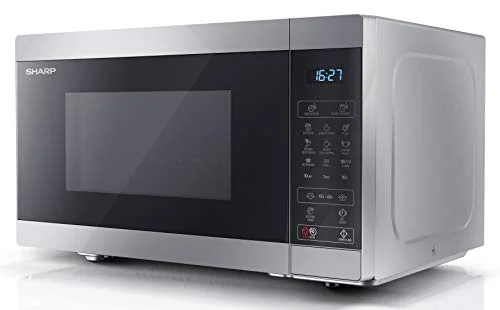
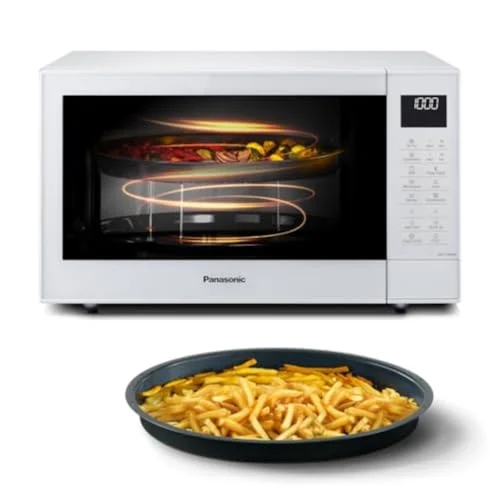
Our pick for a small kitchen is the Panasonic NN-E27JWMBPQ. It is the standout example of a usable 20-litre cavity in one of the smaller bodies in its class, so it sits comfortably on a tight worktop or under a wall cabinet where bigger units will not fit. It is also light enough to move or store easily, with simple controls and Panasonic's everyday reliability, which makes it ideal for a flat, a galley kitchen, an annexe or a caravan.
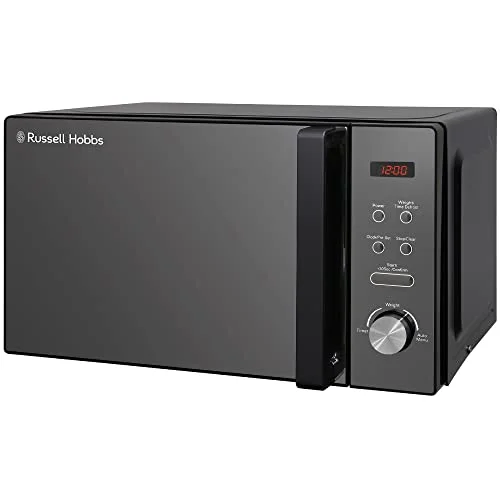
If budget is the priority, the Russell Hobbs RHM2076B is another compact 20-litre solo at a lower price, with the same everyday cooking power and a smaller worktop footprint than the 23-litre all-rounders. Both are solo microwaves, which suits small kitchens well: a grill or combination model is larger and rarely worth the extra space when worktop room is your main constraint. If you genuinely need browning and can find the room, see our type guide first.