The Best Microwaves of 2026: an honest comparison
A microwave is the appliance you use more than almost any other in the kitchen, yet most of us buy one in a hurry and grab whatever fits the gap. We tested six current models under the same conditions and tell you honestly which one suits which kitchen, where each one shines, and where the cheaper marketing claims fall apart.
The short version: our best overall pick is the Panasonic NN-DF386BBPQ, a 3-in-1 combination model whose inverter power reheats food far more evenly than any basic microwave, and which grills and bakes too. For the keenest spend-to-quality ratio, the Samsung MS23K3513AK 23-litre solo is the best value, while the Russell Hobbs RHM2076B is the budget choice. For a tight worktop, the compact Panasonic NN-E27JWMBPQ is the sensible buy, and if you want to brown and crisp food, the Sharp YC-MG81U grill is the one to look at. More important than the brand, though, is choosing the right type for how you actually cook.
Our 6 favourites, from the most capable to the best value
- 1
 BEST OVERALL
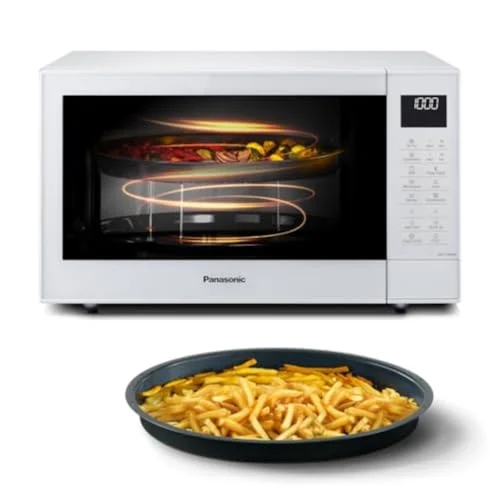
Panasonic NN-DF386BBPQ 3-in-1 Combination Microwave
Our best overall pick. Panasonic's inverter technology is the real difference here: instead of pulsing on and off, it delivers steady, gentler power, so leftovers reheat evenly and chocolate or butter soften without scorching. The DF386 is also a grill and a convection oven, so it can brown, crisp and bake in a small kitchen without a separate oven. You pay more than for a basic solo, but you get a far more capable machine.
- 2
 BEST VALUE
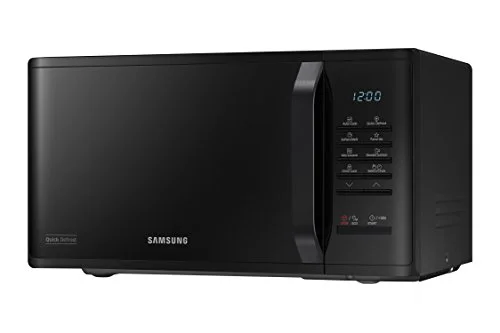
Samsung MS23K3513AK 23L Solo Microwave
Our best value choice. The Samsung MS23K3513AK does the everyday jobs — reheating, defrosting, melting and steaming — with a generous 23-litre cavity and a wipe-clean ceramic enamel interior, all for under a hundred pounds. It is a solo microwave, so it will not brown or crisp, but if you simply want a reliable, roomy, easy-to-clean machine for daily use, this is the rational buy.
- 3
 BEST BUDGET
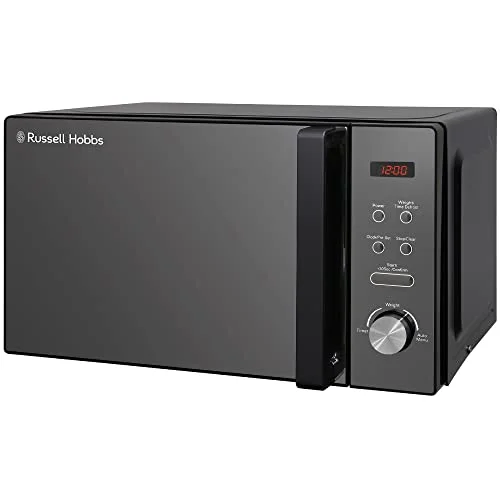
Russell Hobbs RHM2076B 20L Solo Microwave
The best budget unit. The Russell Hobbs RHM2076B delivers honest 800 W solo cooking, a 20-litre cavity and a defrost function at the keenest price here. The controls and finish are plain rather than premium, but everything works as it should. If you want a dependable everyday microwave for the least money, and a grill or oven is not on your list, this is it.
- 4
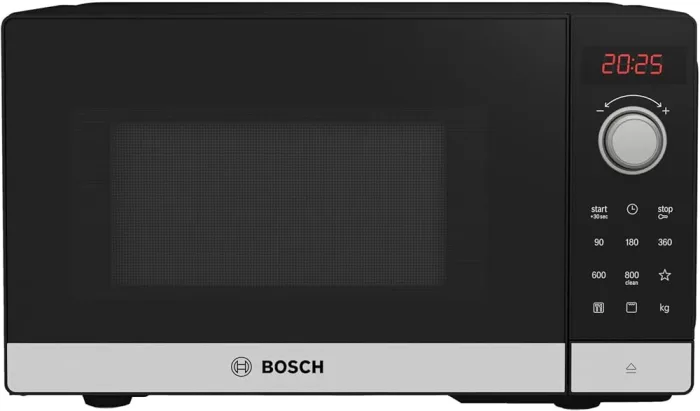 PREMIUM PICK
Bosch Serie 4 FFL023MS2B 20L Solo Microwave
A polished premium alternative. The Bosch Serie 4 FFL023MS2B pairs straightforward 800 W solo cooking with the finish, the controls and the seven AutoPilot programmes you would expect from the brand. It is not the cheapest route to 20 litres of reheating, but if you want a microwave that looks and feels at home in a fitted kitchen and is built to last, it earns its place.
- 5
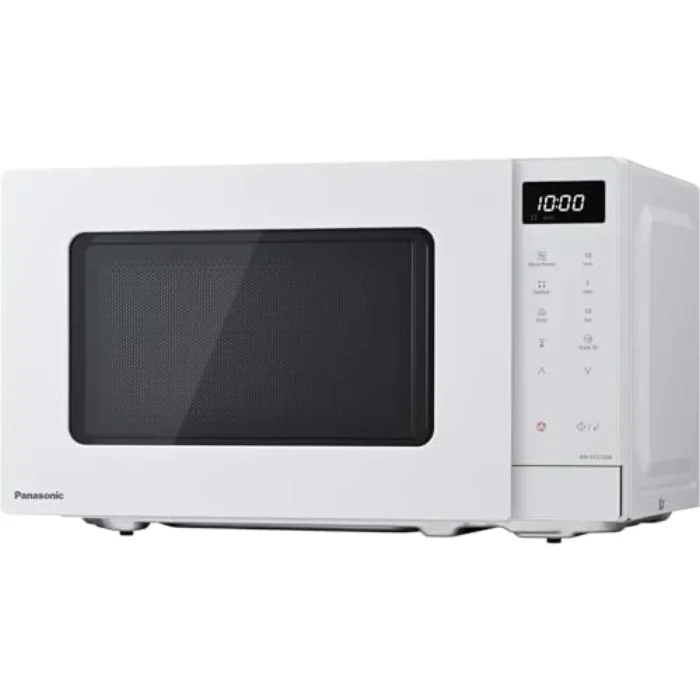 BEST FOR SMALL KITCHENS
Panasonic NN-E27JWMBPQ 20L Compact Solo Microwave
The best choice for a small kitchen. The Panasonic NN-E27JWMBPQ squeezes a usable 20-litre cavity into one of the more compact bodies here, so it suits a galley kitchen, a flat or a caravan where worktop space is tight. Within that brief it is excellent: dependable 800 W cooking and controls so simple anyone can use them. It will not brown or crisp, but as a space-saving everyday solo it is exactly right.
- 6
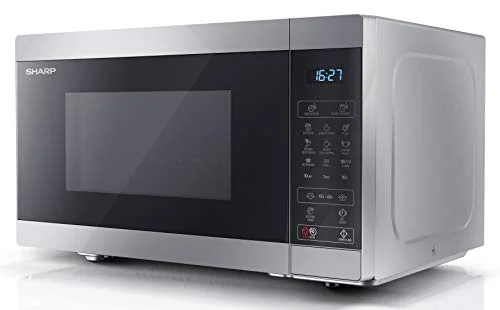 BEST GRILL
Sharp YC-MG81U-S 28L Microwave with Grill
The pick if you want a grill. With a roomy 28-litre cavity and a 1,000 W quartz grill, the Sharp YC-MG81U does what a solo cannot: it browns cheese on a jacket potato, crisps the top of a gratin and grills bacon, then combines microwave and grill for faster golden results. The trade-off is a larger footprint and a touch more cleaning, so only size up to a grill model if you will genuinely use the browning — for plain reheating, a solo is enough.
The best microwaves compared
| Model | Type | Capacity | Microwave power | Rating | Price |
|---|---|---|---|---|---|
| Panasonic NN-DF386BBPQ 3-in-1 Combination Microwave | 3-in-1: microwave, grill, convection oven | 23 litres | 1,000 W | 4.5 | £249.99 |
| Samsung MS23K3513AK 23L Solo Microwave | Solo (microwave only) | 23 litres | 800 W | 4.4 | £95.00 |
| Russell Hobbs RHM2076B 20L Solo Microwave | Solo (microwave only) | 20 litres | 800 W | 4.2 | £69.97 |
| Bosch Serie 4 FFL023MS2B 20L Solo Microwave | Solo (microwave only) | 20 litres | 800 W | 4.3 | £139.99 |
| Panasonic NN-E27JWMBPQ 20L Compact Solo Microwave | Solo (microwave only) | 20 litres | 800 W | 4.4 | £99.00 |
| Sharp YC-MG81U-S 28L Microwave with Grill | Microwave + grill | 28 litres | 900 W | 4.1 | £139.99 |
Microwaves: who each type suits, and who it doesn't
Almost everyone needs a microwave, but not everyone needs the same one. The first and most important decision is not the brand, the colour or the price. It is the type: solo, grill or combination. Get that right and you will be happy with almost any reputable model; get it wrong and you will either pay for functions you never touch or wish you had bought more capability. So before comparing litres and watts, it is worth being honest about how you actually cook.
A solo microwave reheats, defrosts, melts and steams. That is all most people ever ask of a microwave, and it is why the solo is the right buy for the majority of kitchens. It is cheaper, simpler and easier to clean than the alternatives, and the best solos, such as the Samsung MS23K3513, do the everyday jobs beautifully. If your microwave's role is to reheat last night's dinner, defrost a chicken breast and warm a mug of milk, a solo is not a compromise. It is the correct tool.
A grill microwave adds a heating element that browns and crisps. That unlocks the jobs a solo simply cannot do: melting and browning cheese on a jacket potato, crisping the top of a gratin or lasagne, grilling bacon. A combination microwave goes further again, adding a convection oven so it can bake and roast like a small oven. The Panasonic NN-DF386 is our pick here, and for a flat, an annexe or a caravan it can genuinely stand in for a full oven. But each step up costs more, takes more space and adds a little cleaning, so only pay for the extra ability if you will use it. We lay the trade-offs out in full in our guide to solo versus grill versus combination.
Capacity: getting the litres right
Once you have settled on a type, the next number that matters is capacity, measured in litres. It is easy to over-think or under-think this, so here is the plain version. A 17 to 20 litre cavity suits one or two people and tight worktops; it fits a standard dinner plate, though a very large platter can be a squeeze. A 23 litre cavity is the comfortable everyday size for most households, with room to spare for big bowls and tall containers. A 25 litre and above model suits families, batch reheating and anyone who regularly warms large dishes.
There is one trap worth flagging. The litre rating describes the cavity, not the body, and a roomy interior can come in a surprisingly large external case, while a clever design can fit a usable cavity into a compact shell. So always check the external dimensions against your worktop and the gap under any wall cabinet, not just the headline litres. The compact Panasonic NN-E27 is the standout example of a usable 20-litre cavity in a small body, which is exactly why it is our pick for a small kitchen. If space is your main constraint, our guide to the best microwave for a small kitchen walks through the measurements that matter.
Wattage: how many watts you actually need
Wattage measures cooking power, and it is widely misunderstood. More is not automatically better. 800 watts is the everyday sweet spot: quick enough to reheat a plate or defrost meat at a sensible pace, and the level most ready-meal instructions assume, so packet timings just work. A 700 W model still does the job but more slowly, and you may need to add time. 900 W and above speeds things up, which is handy if you are impatient, but it is not the upgrade most people imagine.
Far more important than the headline figure is how the power is delivered. A conventional microwave creates a lower power setting by switching full power on and off in bursts, which is why basic models so often leave food hot at the edges and cold in the middle. An inverter, as fitted to the Panasonic NN-DF386, delivers steady, genuinely lower power instead, so leftovers heat through evenly and delicate jobs like softening butter or melting chocolate are gentler. If even reheating matters to you, the inverter is worth more than an extra hundred watts. We explain the whole thing plainly in our guide to microwave wattage.
The features that earn their keep, and the ones that don't
Once type, size and power are settled, the rest is detail, and it pays to know which details are worth caring about. A wipe-clean ceramic enamel interior, as on the Samsung, is a genuine everyday upgrade: it cleans in seconds and resists the staining and scratching that painted cavities suffer over the years. Auto-cook and defrost programmes set time and power for common foods, which takes the guesswork out for anyone who would rather not think about it. A turntable remains the most reliable way to heat food evenly, and a clear, legible display and a door that opens smoothly make a machine pleasant to live with.
Other features sound appealing but rarely change the decision. Express minute buttons and clock displays are nice to have rather than deciding factors. Smart or app-connected microwaves exist, but a microwave is an appliance you stand in front of, so the connectivity adds cost without solving a real problem. And while brand buys you build quality, support and resale confidence, worth paying for if you value longevity, it is never a substitute for choosing the right type and size in the first place.
How we chose these six
We deliberately picked models that cover the full range of real kitchens rather than six near-identical solos. There is a compact specialist for small spaces, two roomy everyday solos at different price points, a beautifully made premium solo, a grill model for anyone who wants to brown and crisp, and a combination flagship that doubles as a small oven. Every model here is from a brand that is genuinely available and supported in the UK, and each earns its spot for a specific buyer, with no padding. If you start by deciding your type and your space, you will find your microwave on this list. Our full buying guide covers everything else: sizing, programmes, cleaning and the features worth paying for.
Verdict: which microwave should you buy?
For most kitchens the Panasonic NN-DF386BBPQ is the soundest choice if your budget stretches to it: even, inverter-smooth reheating plus the ability to grill and bake in one machine. If you only ever reheat and defrost, save your money and buy a good solo instead, where the Samsung MS23K3513 is the best value and the Russell Hobbs RHM2076 is the keenest budget buy. For a small kitchen choose the compact Panasonic NN-E27; for browning and crisping, the Sharp YC-MG81 grill; and for the best build of any solo here, the Bosch Serie 4. Whichever you pick, the most important step never changes: decide your type and your size first, then choose. Get those right and any of these will serve you well. To see exactly how we score them, read our how we test page.
Frequently asked questions
Which is the best microwave in 2026?
Our best overall pick is the Panasonic NN-DF386BBPQ, a 3-in-1 combination model whose inverter power reheats food far more evenly than a basic microwave, and which also grills and bakes. For the best value we recommend the Samsung MS23K3513AK 23L solo, and for the lowest price the Russell Hobbs RHM2076B is the budget choice. For a small kitchen, the compact Panasonic NN-E27JWMBPQ is the sensible buy.
What is the difference between a solo, grill and combination microwave?
A solo microwave only reheats, defrosts and cooks with microwaves, which is all most people need. A grill microwave adds a heating element that browns and crisps, useful for cheese-topped dishes and bacon. A combination model adds a convection oven too, so it can roast and bake like a small oven. The more it does, the more it costs and the larger it tends to be.
How many watts should a microwave have?
Most solo microwaves are 700 to 900 watts. An 800 W model is the sensible everyday choice: it reheats and defrosts quickly without being so powerful that it overcooks the edges. Lower-wattage models are slower and may need you to add time to packet instructions, while 900 W and above speed things up. Wattage is not the same as cavity size, which is measured in litres.
What size microwave do I need?
Microwave capacity is measured in litres. A 17 to 20 litre model suits one or two people and tight worktops; 23 litres is the comfortable everyday size that fits a standard dinner plate; 25 litres and above suits families or anyone reheating large containers. Always check the external dimensions too, as a roomy cavity can come in a surprisingly large body.
Is an inverter microwave worth it?
For even reheating, yes. A conventional microwave delivers lower power by pulsing full power on and off, which can leave food hot at the edges and cold in the middle. An inverter, as in the Panasonic NN-DF386, delivers steady lower power, so leftovers heat through evenly and delicate jobs like softening butter or chocolate are gentler. It costs a little more but noticeably improves results.